Why does my water heater keep running out of hot water
Your water heater runs out of hot water because the demand is outpacing the supply, the tank is failing, or the dip tube, element, or thermostat has quit. Here is how to tell which.
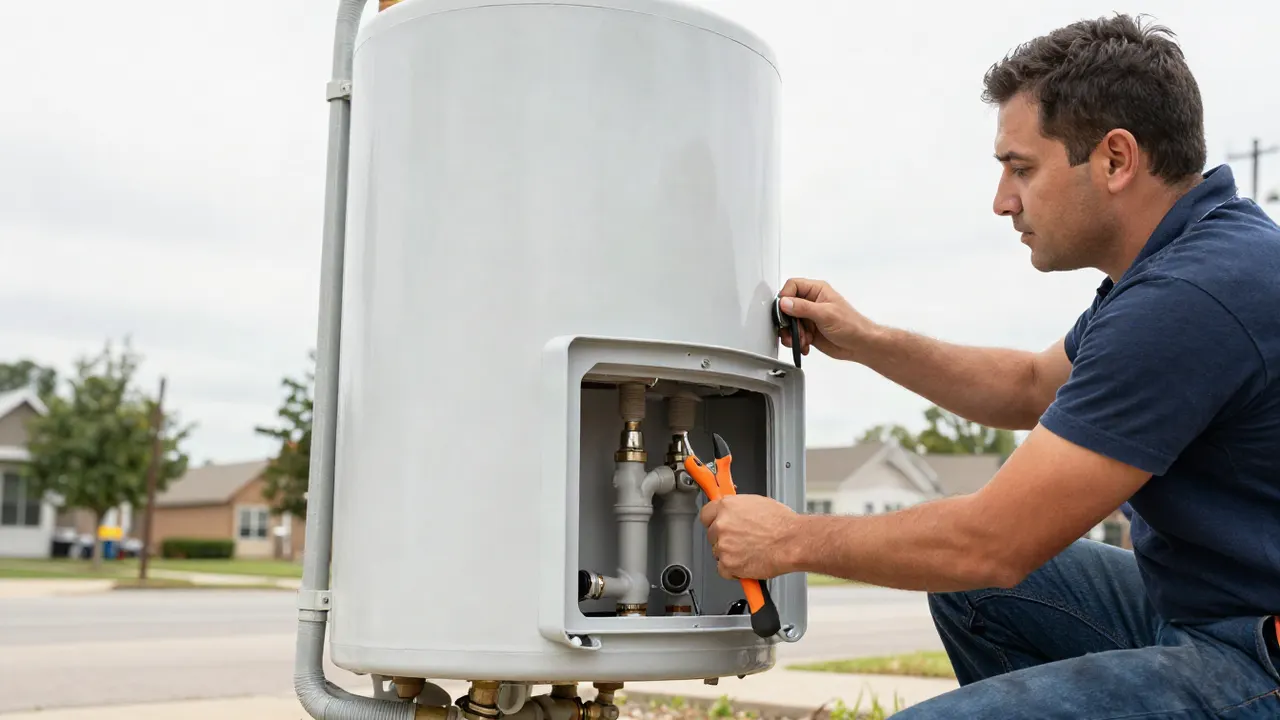
Your water heater keeps running out of hot water because either the demand in your home has outgrown the tank, or a component inside the unit has failed - a broken dip tube, a burned-out lower element, a stuck thermostat, or sediment that has cut the tank's usable capacity by a third or more. In most Southlake homes we service, it is one of those two things, and a licensed plumber can tell you which in about 20 minutes.
Below we break down the specific causes, the 2026 repair and replacement costs in this area, and how to decide whether to fix the unit or replace it.
The short answer: demand, failure, or both
A water heater running out of hot water in Southlake is a supply-and-demand problem first. A 50-gallon tank holds 50 gallons, but only about 70% of that is usable hot water before the incoming cold water dilutes the rest. If two showers, a dishwasher, and a laundry cycle overlap, you can drain a healthy 50-gallon tank in 12 minutes.
If your usage has not changed and the hot water still quits early, the tank itself is the problem. Sediment, a failed dip tube, a bad heating element, or a thermostat that reads the wrong temperature will all shorten your hot showers. The fix depends on which one it is.
For homeowners who want a plumber who has seen every version of this problem across the area, our team handles plumbing southlake TX calls like this every week.
Why does my water heater run out of hot water in Southlake TX?
Southlake's water is moderately hard - roughly 8 to 10 grains per gallon - and that mineral content is the single biggest reason local water heaters fail earlier than the manufacturer's sticker suggests. Hard water deposits calcium and magnesium on the tank floor and on the heating elements. A tank that should last 10 to 12 years often starts losing capacity at year six or seven here.
Three other local factors matter:
- Large homes with multiple bathrooms. Many Southlake houses have four or five bathrooms and a master suite with a rain shower and a body-spray system. A 50-gallon tank cannot keep up with two of those running at once.
- Recirculating hot water loops. Common in newer builds, these keep hot water at the tap but also cycle the tank constantly, which accelerates wear on the elements and the anode rod.
- Attic and garage installs. In a Texas attic, ambient temperatures swing from 40°F in January to 140°F in July. That thermal stress shortens the life of plastic dip tubes and rubber gaskets.
If your home has any of those, the answer to "why does my water heater keep running out of hot water" is usually capacity, not a broken part.
Tank water heaters: the six parts that fail first
On a standard tank water heater, these are the components we replace most often, in order of frequency.
1. The dip tube
The dip tube carries cold water from the top of the tank to the bottom, where the burner or element heats it. When it cracks or snaps off, cold water enters at the top and mixes with the hot water before it ever reaches the burner. You get five minutes of hot water instead of 20. A replacement dip tube runs $150 to $280 installed in 2026.
2. The lower heating element (electric) or the burner (gas)
On an electric tank, the lower element does most of the recovery work. When it burns out, you get a small amount of hot water from the top element and then nothing. A new element is $180 to $320 installed. On gas, a clogged burner or a failed thermocouple produces the same symptom and costs $140 to $260 to fix.
3. The thermostat
A thermostat stuck at 110°F instead of 120°F will make the tank feel like it is running out when it is actually just running cool. A thermostat replacement is $160 to $300.
4. Sediment buildup
After three or four years in Southlake water, the tank floor can hold an inch or more of scale. That scale insulates the water from the burner, slows recovery, and reduces usable capacity. A flush costs $120 to $200 and should be done every 12 months in this area.
5. The anode rod
The sacrificial anode rod protects the tank lining from rust. Once it is consumed - usually in four to six years here - the tank starts corroding from the inside. Replacing the rod is $180 to $350 and can add years to the tank's life if it is caught early.
6. A failing tank itself
If you see rust-colored water or a puddle under the unit, the tank has failed. No repair fixes a rusted-through tank. Replacement is the only option.
If you are not sure which of these applies, our team handles water heater repair southlake TX calls with a full diagnostic on the first visit.
Tankless water heater issues Southlake homeowners run into
A tankless unit does not run out of hot water the way a tank does - it runs out of capacity. If the incoming groundwater temperature drops or the flow rate through the unit exceeds its rating, the outlet temperature falls and you feel like you are running out.
Three common causes in Southlake:
- Scale on the heat exchanger. Hard water coats the inside of the exchanger, reducing heat transfer. Annual descaling is required here, not optional. A descale service is $150 to $250.
- Undersized unit. A tankless heater rated for 7 gallons per minute cannot run two showers and a dishwasher at once in January, when incoming water is around 55°F. You need a unit rated for the actual demand.
- Gas supply or venting issues. A tankless unit needs a dedicated gas line sized for its BTU input. If the line is undersized, the burner will not fire at full capacity and the water temperature will sag.
If you have a tankless unit and the hot water is inconsistent, our team handles tankless water heater services southlake TX including descaling, repair, and replacement.
How do I fix a water heater that runs out of hot water in Southlake TX?
The fix depends on the cause, and the fastest way to narrow it down is to answer three questions before you call anyone.
- How old is the tank? Under six years, a part failed. Over ten, the tank is near end of life and replacement usually makes more sense than another repair.
- Is the water hot at first and then cold, or never hot at all? Hot-then-cold points to a dip tube or sediment. Never-hot points to an element, thermostat, or pilot issue.
- Did the problem start suddenly or gradually? Sudden onset is a failed part. Gradual decline is sediment or a dying tank.
If you have a gas unit and smell gas, stop and call us immediately - that is an emergency plumbing southlake TX situation, not a wait-and-see.
For everything else, here is the honest math on repair versus replace in 2026:
- Dip tube, element, thermostat, or anode rod: $140 to $350. Repair.
- Sediment flush: $120 to $200. Repair, and then flush annually.
- Failed tank (rust or leak): $1,400 to $2,600 for a standard 50-gallon replacement installed, $2,800 to $4,500 for a tankless install with the gas and venting work included.
If the tank is over ten years old and the repair is over $400, replacement is usually the better call. If the tank is under eight and the repair is under $350, fix it.
What size water heater do I need for my Southlake home?
For a Southlake home with three or four bathrooms and four or more people, a 75-gallon tank or a tankless unit rated for 9 to 11 gallons per minute is the right size. A 50-gallon tank is fine for two people in a two-bath home. Anything larger than four occupants in a four-bath house needs either a bigger tank or a tankless unit sized to the actual fixture count.
The rule of thumb: count the number of showers that could run at the same time, multiply by 2.5 gallons per minute, and add 1.5 gallons per minute for the dishwasher and laundry. That number is your minimum flow rate. For most Southlake homes, it lands between 8 and 11 GPM.
If you are replacing a tank with a tankless unit, the install requires a dedicated gas line, a new vent, and often an electrical circuit for the igniter. Our team handles water heater installation southlake TX including the gas and venting work, so the unit is sized correctly the first time.
What to watch out for
Three mistakes cost Southlake homeowners the most money on this problem.
Replacing the water heater before diagnosing it. A $180 dip tube replacement solves the same symptom as a $2,000 tank replacement. Get a diagnosis first.
Skipping the annual flush. In Southlake water, a $150 flush every year adds three to five years to the tank's life. Skipping it is the single most expensive habit we see.
Oversizing the tank instead of fixing the demand. If your teenager takes 20-minute showers, a bigger tank just delays the problem. Low-flow showerheads and a recirculating loop solve it for less.
When to call a professional
Call a licensed plumber when the water is hot at first and then cold, when you see rust-colored water, when the tank is leaking, or when the breaker trips every time the unit runs. Those are not DIY fixes.
At Southlake Oakline Plumbing, we diagnose the unit on the first visit, give you a flat price before we start, and carry the common parts - dip tubes, elements, thermostats, and anode rods - on the truck. If the tank needs to be replaced, we can usually do it the same day.
Frequently Asked Questions
Why does my water heater keep running out of hot water in Southlake?
In Southlake, the most common causes are a failed dip tube, a burned-out lower heating element, sediment buildup from hard water, or a tank that is simply too small for the number of bathrooms and people in the home. A plumber can identify which in about 20 minutes.
How do I fix a water heater that runs out of hot water in Southlake TX?
Start by checking the tank's age and whether the water is hot-then-cold or never hot. Hot-then-cold usually means a dip tube or sediment; never-hot means an element or thermostat. Most repairs run $140 to $350 installed. If the tank is over ten years old, replacement is usually the better call.
Should I repair or replace my water heater in Southlake?
Repair if the tank is under eight years old and the fix is under $350. Replace if the tank is over ten years old, the repair is over $400, or you see rust-colored water or a leak. A standard 50-gallon replacement installed in 2026 runs $1,400 to $2,600 in this area.
What size water heater do I need for my Southlake home?
For three or four bathrooms and four or more people, a 75-gallon tank or a tankless unit rated for 9 to 11 gallons per minute. For two people in a two-bath home, a 50-gallon tank is enough. Size to the number of showers that could run at once, not the square footage.
How often should I flush my water heater in Southlake?
Every 12 months. Southlake water runs 8 to 10 grains per gallon of hardness, which builds scale on the tank floor and elements faster than in softer-water cities. An annual flush costs $120 to $200 and can add three to five years to the tank's life.
Get help with plumbing in Southlake
If your hot water is quitting early, we can diagnose it and give you a flat price before we start. Call Southlake Oakline Plumbing at (682) 470-5111 and we will get your hot water back.