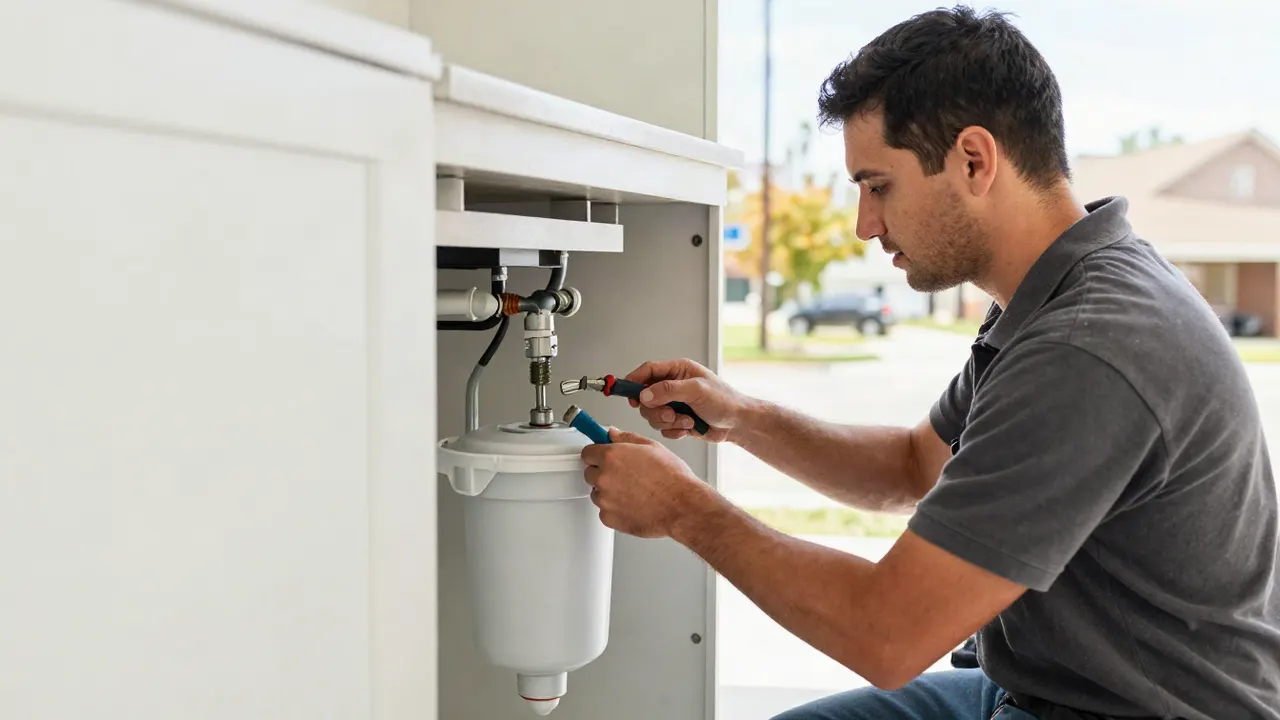
Tankless vs tank water heater: which is better for Southlake homes
Tankless wins on space and endless hot water; tanks win on upfront price. Here is the honest 2026 breakdown for Southlake homes, from sizing to freeze risk.
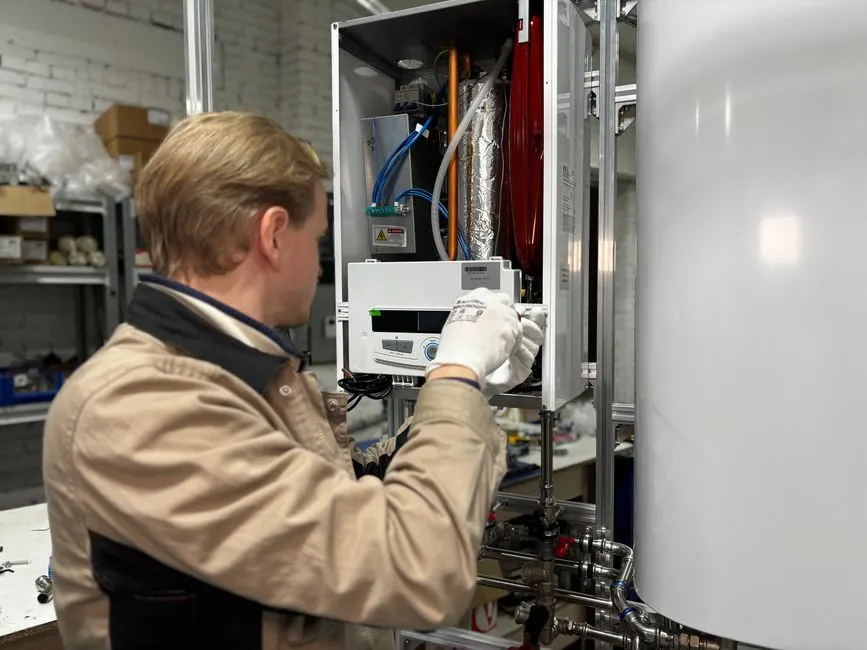
For most Southlake homes, tankless is the better long-term choice - you get endless hot water, it frees up 9 to 12 square feet of garage or closet space, and it lasts roughly twice as long as a tank. A tank is the better call when your budget is tight, your gas line or venting can't be upgraded cheaply, or you only need 40 to 50 gallons of hot water at a time. The rest of this post breaks down the real numbers, the sizing math for Southlake water, and the mistakes we fix every month.
Tankless vs tank water heater in Southlake is a comparison that depends on three things: how many people live in the house, what fuel you already have, and how long you plan to stay. Get those right and the decision usually makes itself.
The short answer for Southlake homeowners
Southlake homes are overwhelmingly natural gas territory, and that matters. A gas tankless unit heats water on demand with a burner that fires only when a fixture calls for hot water. A traditional tank keeps 40 to 80 gallons at 120 to 140 degrees around the clock, reheating it whether you're home or not.
That standby loss is the whole ballgame. A tank sitting in a Southlake garage in July is fighting 100-degree ambient air and losing heat through its shell all day. A tankless unit doesn't have that problem because there's no stored water to keep warm.
If you want the full menu of what we install and service, our plumbing southlake TX page covers the whole scope - water heaters, repiping, drains, and everything attached to them.
How each system actually works
A tank water heater is a glass-lined steel cylinder that stores hot water and refills as you use it. Recovery time is the limit: a 50-gallon gas tank recovers about 40 gallons per hour, so the third shower in a row can go cold.
A tankless water heater is a wall-mounted heat exchanger that raises the temperature of water as it flows through. Flow rate, not tank size, is the limit. Most residential gas units handle 7 to 11 gallons per minute, which is enough for two showers running at once in a well-sized install.
Both need maintenance. A tank needs the anode rod checked every 2 to 3 years and a flush annually. A tankless unit needs descaling every 12 to 18 months in North Texas, because our water runs 8 to 12 grains per gallon of hardness. Skip that and the heat exchanger scales up and you lose capacity.
Tankless vs tank water heater for Southlake homes: head-to-head
Here's how the two stack up on the things Southlake homeowners actually ask about.
- Upfront cost: Tank install runs $1,200 to $2,400. Tankless runs $3,200 to $6,500 depending on venting and gas line work.
- Lifespan: Tank averages 8 to 12 years. Tankless averages 18 to 22 years with annual descaling.
- Energy use: Tankless cuts water heating gas use 22 to 30 percent in a typical four-person household.
- Hot water supply: Tankless is unlimited; tank is capped by tank size and recovery rate.
- Footprint: A tankless unit is roughly the size of a carry-on suitcase. A 50-gallon tank is 5 feet tall and 22 inches wide.
- Freeze risk: Tankless units have a freeze-protection cycle but need a recirculation line or insulation in an unconditioned garage.
On raw economics, a tankless unit in a Southlake home typically pays back its price premium in 6 to 9 years through lower gas bills and the avoided cost of one replacement tank. After that it's pure savings.
What tankless really costs in Southlake in 2026
Typical 2026 pricing in this area breaks down like this for a straightforward swap where the gas line and venting already work:
- Standard 40 to 50-gallon gas tank replacement: $1,200 to $2,400 installed
- Entry-level condensing tankless (199,000 BTU): $3,200 to $4,400 installed
- Mid-range tankless with recirculation pump: $4,200 to $5,600 installed
- Gas line upgrade from 1/2-inch to 3/4-inch: $450 to $900
- New stainless venting through the roof or sidewall: $600 to $1,400
- Annual descaling service: $150 to $250
The line items that surprise people are the gas line and the venting. A 199,000 BTU tankless unit needs far more gas volume than a 40,000 BTU tank, and older Southlake homes built in the 1980s and 1990s often have undersized runs. We quote that upfront so there's no surprise on install day.
If you're weighing a repair against a replacement, our water heater repair southlake TX team can tell you in one visit whether the unit has another five years in it or whether you're throwing money at a dead tank.
What size tankless water heater do I need in Southlake TX?
Size by flow rate and temperature rise, not by square footage. In Southlake, incoming groundwater sits around 68 to 72 degrees in summer and drops to 52 to 58 degrees in January. That winter number is the one that matters.
Here's the math for a 199,000 BTU unit rated at 11 GPM at a 35-degree rise. In January, you need roughly a 65-degree rise to hit 120 degrees at the tap, which cuts that unit's real output to about 5.9 GPM. That's one shower plus a dishwasher, not three showers.
Rough guide for Southlake homes:
- 1 to 2 people, one bathroom: 7 to 8 GPM unit
- 3 to 4 people, two bathrooms: 9 to 10 GPM unit
- 5+ people or 3+ bathrooms: 11 GPM unit, or two units in a manifold setup
Add 1 to 2 GPM if you have a large soaking tub or a body-spray shower. Oversizing wastes money; undersizing means cold showers in February. We run the numbers against your actual fixtures before recommending anything.
Southlake-specific factors nobody mentions
Three local conditions change the tankless vs tank calculation here more than most homeowners expect.
Hard water
Southlake water runs hard enough that scale is the number one killer of tankless heat exchangers in this area. Without annual descaling, a unit that should last 20 years can be limping at 10. Pairing a tankless unit with a water softener installation southlake TX is the single best thing you can do for its lifespan.
Garage placement and freeze events
Most Southlake water heaters live in the garage, and February 2021 is still fresh in everyone's memory. A tank in a garage holds 40 to 50 gallons of thermal mass and takes hours to freeze. A tankless unit has a few cups of water in the exchanger and can freeze in a single hard night if it's not insulated or on a recirculation loop. We insulate the piping and set the freeze-protection cycle correctly on every install.
Newer construction and code
Homes built in Southlake after 2015 often have tighter mechanical closets, which favors tankless on space alone. Current Texas code also requires a drip pan and a pan drain line on any tank replacement in an interior closet - something a lot of quick swap jobs skip.
Common mistakes we see on water heater swaps
We get called to fix these constantly, usually within a year of the original install.
- Skipping the gas line calculation. A tankless unit on a 1/2-inch gas run will short-cycle and throw error codes. It needs a proper load calc.
- Reusing old venting. Tankless units need Category III stainless venting, not the galvanized flue from the old tank.
- No isolation valves. Without them, descaling the unit means shutting off the whole house. Every install we do gets a service valve kit.
- Ignoring the recirculation decision. Without a recirc line, you'll wait 20 to 40 seconds for hot water at a far bathroom. With one, you get it in 3 to 5 seconds and pay a small amount of extra gas.
- Not pulling a permit. Water heater replacements in Southlake require a permit and inspection. Unpermitted work becomes a problem at resale.
If you're also chasing a pressure or flow issue at the same time, our leak detection southlake TX service can rule out a hidden line problem before you spend money on a new heater.
When to call a professional
Call us when the tank is leaking from the shell, when you see rust-colored hot water, when the unit is over 10 years old and rumbling, or when you're ready to switch to tankless and need the gas and venting scoped correctly.
Southlake Oakline Plumbing handles the whole job - sizing, permit, gas line, venting, install, and haul-away of the old unit. We test the unit under real load before we leave, so you know the third shower of the morning will be hot.
Frequently Asked Questions
Is tankless better than tank for Southlake homes?
For most Southlake homes, yes - tankless lasts 18 to 22 years versus 8 to 12, uses 22 to 30 percent less gas, and never runs out of hot water. The exception is a tight budget or a home where gas line and venting upgrades push the installed cost past $6,500.
How much does a tankless water heater cost in Southlake?
Expect $3,200 to $6,500 installed in 2026, depending on BTU rating, gas line size, and venting route. A basic swap with existing 3/4-inch gas and stainless venting lands near the low end. Adding a recirculation pump and new venting pushes it toward the top.
What size tankless water heater do I need in Southlake TX?
Size by winter flow rate. A 3 to 4 person, two-bath Southlake home usually needs a 9 to 10 GPM unit. Five or more people, or three-plus bathrooms, calls for 11 GPM or a two-unit manifold. Cold January groundwater cuts real output roughly 40 percent versus summer ratings.
Should I switch to tankless in Southlake?
Switch if you plan to stay in the home more than 6 years, you have natural gas, and you want unlimited hot water. Stay with a tank if you're selling within 2 years, your gas line is undersized and expensive to upgrade, or you need the lowest upfront number.
How long does a tankless install take?
A straight replacement takes 4 to 6 hours. A conversion from tank to tankless with gas line and venting work runs 1 to 2 days, mostly because of the venting route and the permit inspection. We schedule the inspection and handle it for you.
Get help with plumbing in Southlake
Whether you're replacing a failed tank this week or planning a tankless upgrade for next spring, we'll size it right, pull the permit, and install it clean. Call Southlake Oakline Plumbing at (682) 470-5111 and we'll get you a straight answer on which system fits your home.